



Top Benefits of Ductless Mini-Split Systems for Energy Efficient HVAC Solutions
By Steady Air LLC, Steady Air LLC
At Steady Air LLC, we have seen ductless mini-split systems become a preferred option for homeowners seeking efficient heating and cooling. These systems improve comfort while delivering measurable energy savings. In this article, we share the principal advantages of ductless mini-splits compared with conventional HVAC, explain how they enable energy-efficient zoning, and outline the long-term cost savings associated with installation. We also discuss the importance of professional installation and maintenance, how these systems mitigate common HVAC issues, and local incentives available to residents of Western Washington, WA.
If you are evaluating heating and cooling options, we provide practical guidance on where mini-splits fit best, what to expect during installation, how to maximize energy savings through control strategies, and which maintenance tasks preserve system performance. Our goal is to support informed conversations with contractors and help homeowners assess whether ductless technology aligns with their comfort needs and home layout.
What Are the Key Advantages of Ductless Mini-Split Systems Compared to Traditional HVAC?
Ductless mini-split systems offer several advantages over conventional HVAC equipment. They deliver conditioned air without ductwork, avoiding the energy losses associated with duct leakage. A principal benefit is improved energy efficiency: inverter-driven compressors modulate speed to match demand, which reduces energy consumption and lowers utility bills.
Beyond efficiency, mini-splits provide installation flexibility because indoor units mount on walls, ceilings, or floor consoles, and require only a small penetration for refrigerant and electrical lines. Many homeowners also appreciate the low noise profile of modern indoor units and the discrete, contemporary designs that blend into living spaces. Because the systems are modular, homeowners can phase installation—adding zones later if needs change—without a complete system overhaul.
How Do Mini-Splits Provide Flexible and Zoned Heating and Cooling?
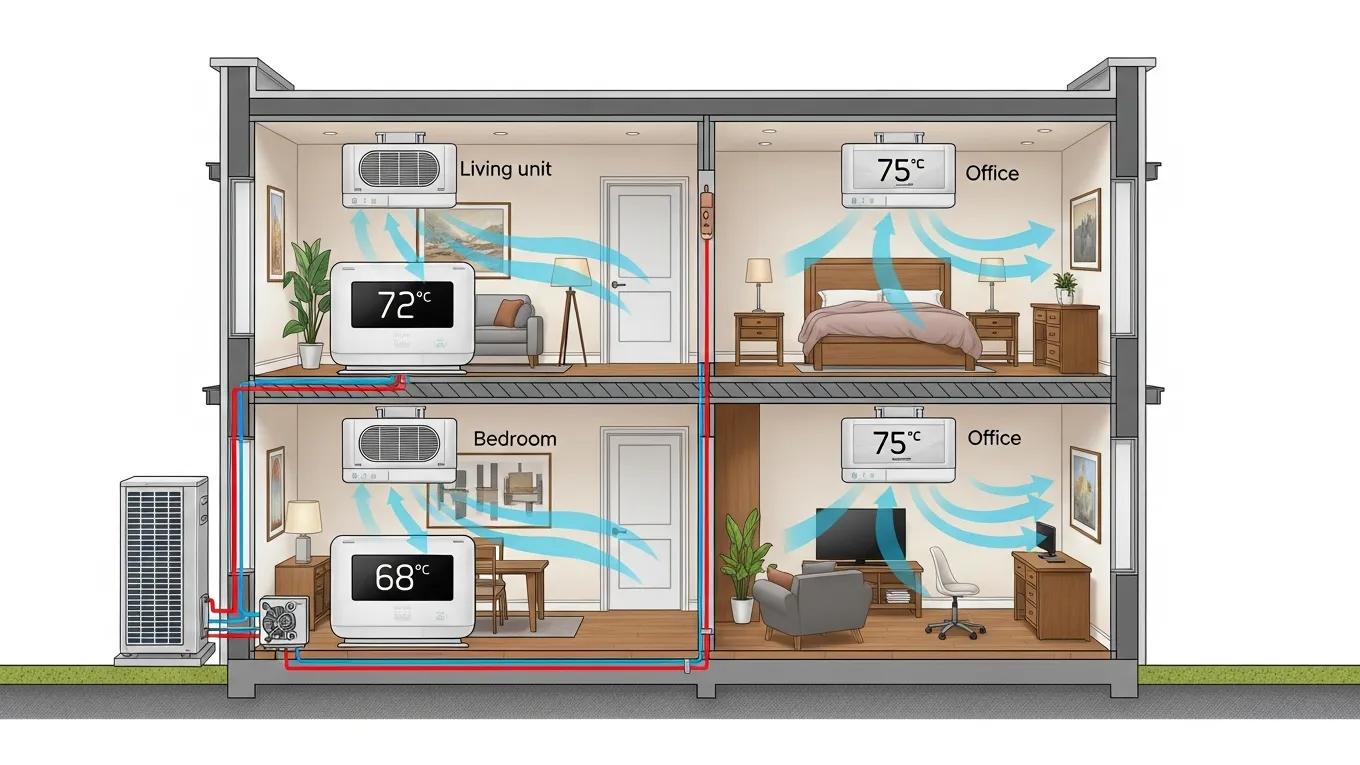
Mini-split systems enable flexible, zoned heating and cooling so different rooms can be maintained at independent temperatures. This zoning is particularly beneficial in larger homes or spaces with diverse thermal requirements. Room-by-room control enhances occupant comfort and can improve indoor air quality. Conditioning only occupied areas reduces overall energy use.
Control options are broad: many systems include handheld remotes, wall-mounted thermostats, weekly timers, and Wi‑Fi interfaces for smartphone control. Occupancy sensors and programmable schedules can further reduce unnecessary runtime by lowering setpoints automatically in unused rooms. The ability to target conditioning where and when it is needed makes mini-splits especially well suited to additions, converted attics, guest suites, and rooms without existing ductwork.
Why Are Ductless Systems More Energy Efficient Than Central Air Systems?
Ductless systems generally achieve higher efficiency than central air because they eliminate duct losses that allow conditioned air to escape. By supplying air directly to living spaces, mini-splits reduce thermal waste. Studies have reported efficiency gains of up to nearly half compared with conventional systems, making mini-splits an effective choice for energy-conscious homeowners.
In practice, inverter (variable-speed) compressors deliver energy savings by matching capacity to load with fine granularity instead of turning the compressor fully on and off. This reduces start-up losses and keeps indoor temperatures steady, which both improves comfort and reduces peak electrical demand. Because indoor units are closer to occupied spaces, less energy is spent overcoming distribution inefficiencies and temperature stratification common in ducted systems.
How Does Energy Efficient Zoning with Ductless Mini-Splits Reduce Utility Bills?
Energy-efficient zoning with ductless mini-splits can produce meaningful reductions in utility bills. Individual-room control prevents energy being spent on unoccupied spaces. This targeted approach maintains comfort where it is required while lowering overall energy consumption.
Practical savings depend on user behaviour and how many zones are installed: when occupants routinely lower setpoints in unoccupied rooms or use scheduled setbacks overnight, the system runs less overall and the household sees lower energy use. Zoning also allows homeowners to prioritize comfort in spaces that most affect daily life, such as living rooms and bedrooms, rather than conditioning seldom-used areas like storage rooms or attics.
What Is Energy Efficient Zoning and How Does It Work in Mini-Split Systems?
Energy-efficient zoning divides a home into independently controlled areas. In mini-split installations, multiple indoor units connect to a single outdoor compressor, with each indoor unit adjustable on its own. This configuration optimizes energy use by avoiding unnecessary heating or cooling of unused rooms while maintaining occupant comfort.
Common configurations include one outdoor unit serving two to several indoor heads, with system design considering line length limits and outdoor unit capacity so each zone receives adequate airflow. Installers balance indoor head locations to avoid short-cycling and to ensure that conditioned air circulates effectively within each zone. Proper zoning strategy pairs occupant use patterns with unit placement to maximize the comfort-to-energy ratio.
How Can Customized Comfort Zones Improve Home Comfort and Save Energy?
Customized comfort zones created with ductless mini-splits improve household comfort by permitting specific temperature settings for different rooms. For example, bedrooms can be kept cooler for sleep while living areas remain warmer during occupied periods. This targeted control reduces energy consumption by limiting conditioning to inhabited areas.
As a simple illustration, a household that keeps living spaces comfortable during the day and reduces conditioning in bedrooms until evening will usually run the system less than a household that conditions every room to the same setpoint around the clock. Similarly, homes with mixed-use rooms—home offices, hobby spaces, and media rooms—benefit from per-room control because each space can be tuned to its primary use without affecting the entire house.
What Are the Cost Savings and Long-Term Benefits of Installing Ductless Mini-Split Systems?
Installing ductless mini-split systems can deliver substantial long-term cost savings. Although initial costs may be higher than some traditional options, ongoing reductions in energy and maintenance expenses, together with potential increases in property value, often offset the upfront investment.
Long-term benefits include lower operating expenses when systems are used efficiently, reduced maintenance related to duct cleaning and repair, and fewer distribution losses. Because many units are modular, component replacement can be limited to a single indoor head rather than an entire central system, which can reduce piecemeal repair costs. Additionally, retrofits that avoid major construction often preserve resale value by modernizing a home’s HVAC without invasive ductwork.
How Does Mini-Split Installation Cost Compare to Traditional HVAC Systems?
Installation costs vary according to the number of zones and the complexity of the site. Mini-splits commonly require less invasive installation than central systems, which can reduce labor requirements. Over time, energy savings from efficient operation can help recoup the initial expenditure.
Factors that influence installation cost include the number of indoor heads, the distance between indoor units and the outdoor compressor, wall or ceiling finishes that must be penetrated, and whether electrical upgrades or permits are required. Jobs in older homes can sometimes be more involved if additional circuit capacity or structural modifications are necessary. At Steady Air LLC, we recommend getting multiple quotes and ensuring proposals include commissioning, refrigerant charge verification, and a clear warranty to help homeowners compare true installed costs.
What Are the Expected Energy Savings and Payback Periods for Mini-Splits?
Homeowners can expect energy savings in the range of approximately one-quarter to half compared with conventional HVAC systems. Typical payback periods are several years, depending on usage patterns and local energy prices, making mini-splits a sound financial option for those seeking improved efficiency.
Payback periods are sensitive to how the system is used: consistent zoning and the use of programmable schedules accelerate payback, while poor control practices can delay it. Local electricity rates and climate also affect payback—homes in milder climates or with significant cooling needs may see different economics. We encourage buyers to consider lifetime operating costs and maintenance expectations alongside upfront price when evaluating value.
Why Is Professional Installation and Maintenance Critical for Ductless Mini-Split Performance?
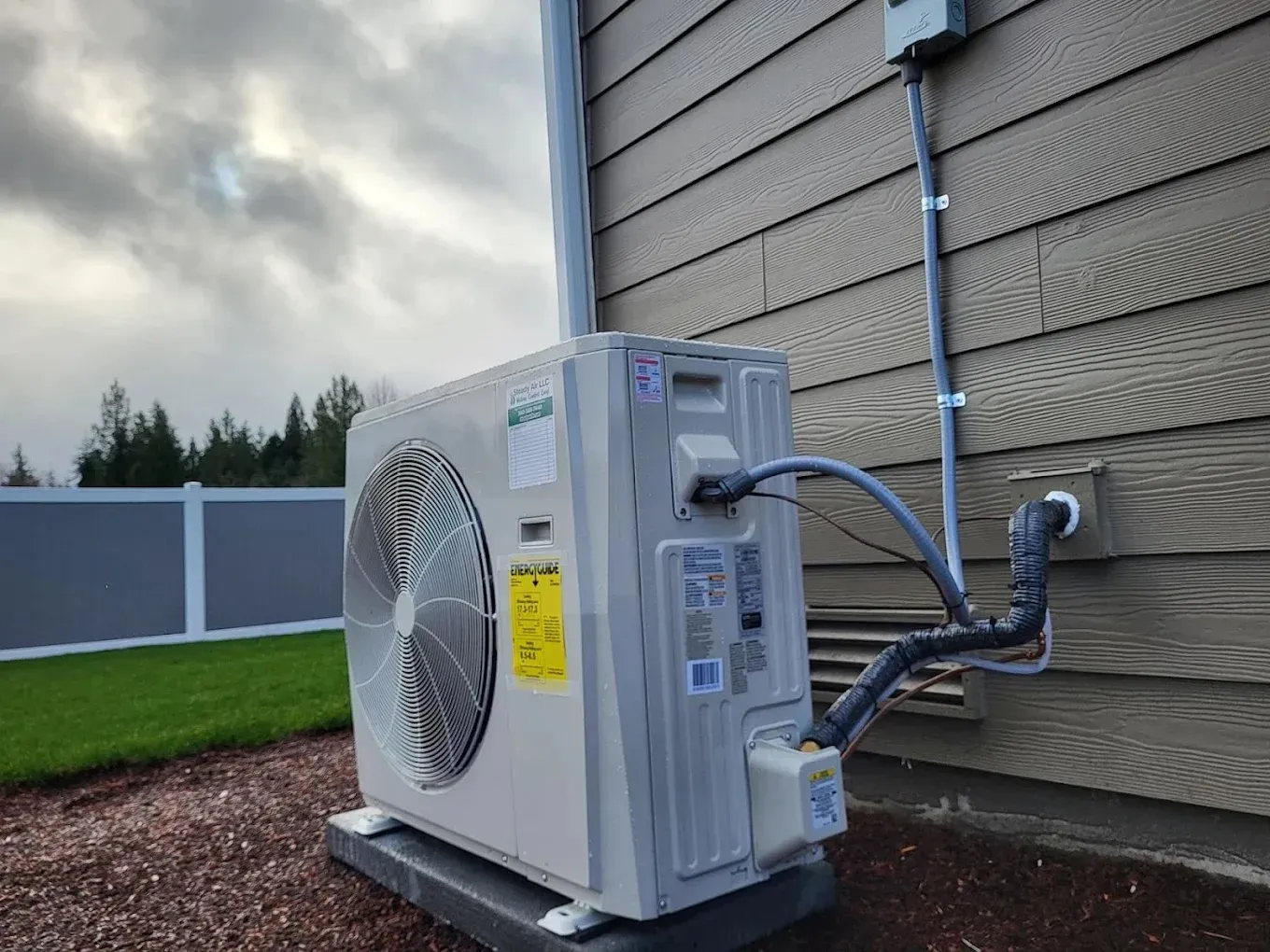
At Steady Air LLC, we emphasize that professional installation and scheduled maintenance are essential to secure optimal performance from ductless mini-split systems. Correct sizing and installation by trained technicians influence both efficiency and service life. Regular maintenance helps prevent performance decline and costly repairs.
Our expert installers perform a room-by-room load assessment, verify refrigerant charge, confirm proper electrical connections, and commission the system to ensure all zones respond correctly. Proper commissioning includes testing airflow, verifying thermostat communication, and ensuring drain lines and mounting are secure. A professionally commissioned system is more likely to reach manufacturer performance ratings and maintain reliability over time.
How Does Expert Sizing and Installation Enhance System Reliability?
Accurate sizing and expert installation ensure that units match the home’s heating and cooling requirements. Properly matched equipment minimizes short cycling and mechanical stress. As a result, the system operates more reliably, delivers consistent comfort, and conserves energy.
Load calculations account for window area, insulation levels, orientation, occupancy, and internal heat gains. When our installers use appropriate calculation methods and account for unique site conditions—sunrooms, high ceilings, or poorly insulated additions—the selected equipment operates in a narrower, more efficient range. This reduces wear on components and helps preserve warranty coverage by ensuring the system is used within manufacturer guidelines.
What Are the Recommended Maintenance Practices to Extend Mini-Split Lifespan?
- Regular Filter Cleaning: Cleaning or replacing filters every 1-3 months ensures optimal airflow and efficiency.
- Annual Professional Inspections: Scheduling annual maintenance checks with a qualified technician can identify potential issues before they become major problems.
- Outdoor Unit Care: Keeping the outdoor unit free from debris and ensuring proper drainage helps maintain system performance.
These maintenance practices improve reliability and contribute to sustained energy savings.
Seasonal checklist suggestions include: clearing vegetation and snow from the outdoor unit, inspecting and cleaning indoor unit coils and fans, confirming drain lines are clear, checking electrical connections for signs of wear, and testing remote controls and smart features. Documenting service dates and any minor repairs helps maintain a useful history that can be valuable for warranty claims or future troubleshooting.
How Do Ductless Mini-Split Systems Address Common HVAC Problems Like Inefficiency and Frequent Breakdowns?
Ductless mini-split systems mitigate common HVAC problems such as inefficiency and frequent breakdowns through contemporary design and control features. Their modular configuration and advanced controls reduce system stress and operational losses.
Because mini-splits eliminate long runs of ductwork, they avoid many issues associated with ducted systems including leaks, insulation degradation inside ducts, and the accumulation of dust in duct cavities. Fewer mechanical components involved in air distribution means fewer points of failure; if one indoor head requires service, the rest of the system typically continues to operate while repairs are completed.
What Makes Mini-Splits a Reliable Alternative to Aging Central HVAC Units?
Mini-splits represent a reliable alternative to aging central units because they operate independently of ductwork, reducing points of failure and loss. Inverter compressor technology provides precise temperature control, which improves comfort and increases system efficiency.
For homes with outdated or failing central systems, replacing selected zones with mini-splits can be a pragmatic strategy: it improves comfort in priority spaces and avoids the large capital cost of full duct replacement. The modular approach reduces exposure to single-point failures that can take an entire home offline.
How Do Mini-Splits Improve Indoor Air Quality and Comfort?
Ductless mini-split systems enhance indoor air quality by using filtration that captures dust, allergens, and other particulates, producing cleaner indoor air. Many units also offer humidity control, which further improves occupant comfort and well-being.
Filtration media varies by model; routine cleaning and occasional filter replacement keep filtration effective. Because indoor units sit within occupied spaces, the effects of filtration and dehumidification are felt quickly in those rooms. For households with allergy concerns or specific IAQ goals, selecting units with enhanced filtration options and following a disciplined maintenance schedule helps preserve indoor air quality benefits over time.
What Local Benefits and Incentives Are Available for Installing Ductless Mini-Split Systems in Western Washington, WA?
Residents of Western Washington, WA may access local incentives and programs that support the installation of ductless mini-split systems. These initiatives are designed to encourage energy-efficient upgrades and reduce overall energy consumption.
In many jurisdictions, incentives change periodically, so we advise checking with regional utilities, municipal energy offices, and state energy programs for current rebate opportunities or technical assistance. Contractors who work regularly in the area, like Steady Air LLC, are often familiar with local programs and can help homeowners identify qualifying models and required documentation to support a rebate application.
Are There Energy Rebates or Programs Supporting Mini-Split Adoption in Puyallup, WA?
In Puyallup, WA, homeowners may qualify for rebates and incentives when installing ductless mini-split systems. Such programs can provide financial assistance to offset installation expenses. We recommend consulting local utility providers for current program details and eligibility criteria.
When pursuing rebates, homeowners typically need to document contractor invoices, product model numbers, and proof of installation. Working with an installer like Steady Air LLC that understands local rebate requirements can streamline submissions and reduce the administrative burden on the homeowner. It is also prudent to verify whether inspections or pre-approval are necessary before installation begins.
How Does Steady Air LLC Provide Customer-Centric Service for Local HVAC Needs?
Steady Air LLC delivers customer-centric HVAC services across Western Washington, WA. We specialize in the installation, repair, and maintenance of energy-efficient systems and focus on solutions that improve home comfort while reducing energy costs, ensuring recommendations are tailored to each customer’s needs.
Our customer-centric service includes clear written estimates, explanation of equipment options, transparent timelines, and follow-up to confirm customer satisfaction after commissioning. We also offer energy audits or load assessments to help homeowners prioritize upgrades and understand where mini-splits fit into a broader efficiency plan. Choosing a licensed and insured contractor with local references supports predictable outcomes and consistent service quality.
What Are Common Questions About Ductless Mini-Split Systems and Their Benefits?
Prospective buyers frequently pose questions about performance, cost, and suitability of ductless mini-split systems. Clear information helps homeowners evaluate whether mini-splits meet their comfort and efficiency objectives.
- What are the main benefits of ductless mini-split systems? Ductless mini-split systems offer energy efficiency, flexible zoning, and improved indoor air quality, making them a versatile choice for heating and cooling. They also simplify retrofits where installing ductwork would be disruptive or costly, and allow phased upgrades over time to match budget constraints.
- How do ductless systems compare to traditional HVAC systems? Compared to traditional systems, ductless mini-splits provide higher energy efficiency, lower installation costs, and greater flexibility in temperature control. They can be particularly advantageous in homes with room additions, converted spaces, or where ductwork is impractical. The trade-offs to evaluate include the visual presence of indoor heads and considerations about long-term maintenance of multiple indoor units.
- What is the lifespan of a ductless mini-split system? With proper maintenance, ductless mini-split systems can last 15 to 20 years, making them a long-term investment for homeowners. Timely filter care, annual professional inspections, and addressing minor problems early help support expected service life and reduce the likelihood of premature component failures.
Addressing these common questions enables homeowners to make informed decisions about whether a ductless mini-split system is appropriate for their property.
Get Started with Steady Air LLC for Your Energy-Efficient HVAC Solution
At Steady Air LLC, we are committed to helping you experience the measurable benefits of ductless mini-split systems: enhanced energy efficiency, flexible zoning, and improved indoor air quality. When correctly specified and maintained, these systems deliver lasting comfort and cost savings.
To evaluate your options and determine the optimal configuration for your home, consult with our qualified local specialists. Before committing to an installation, we provide detailed proposals that include load calculations, equipment lists, commissioning plans, and warranty information. Comparing multiple proposals, checking contractor credentials, and confirming any available incentives will help ensure a satisfactory long-term outcome.
With sensible design and routine care, ductless mini-splits installed by Steady Air LLC are a durable, efficient solution for many homes. Contact us to learn how we can tailor a system to your needs and help you take the next step toward a more energy-efficient residence.